
00:38:28
Requiremnets Prioritizaion
38 mins 28 secs
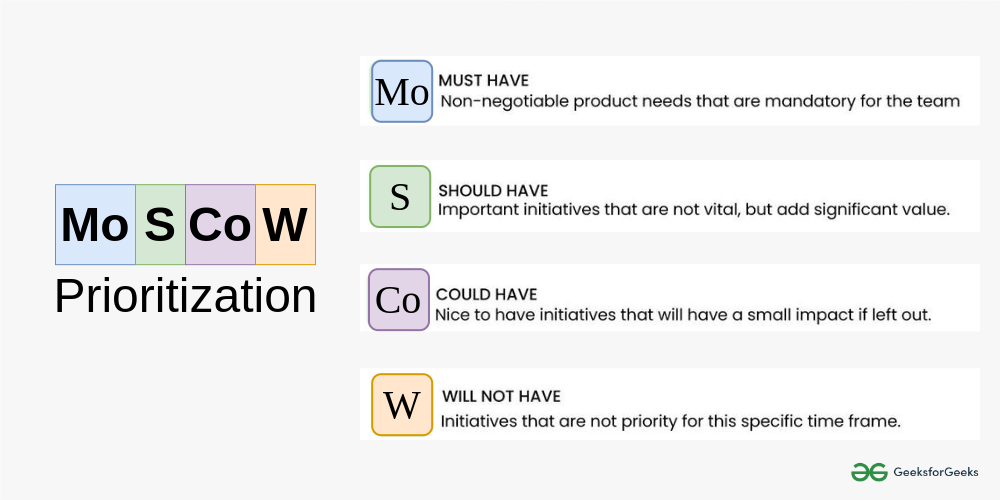
Sure! Here's a clear and professional description for "Requirements Prioritization using MoSCoW" that you can use in your self-study course or training materials:
In any project, not all requirements hold the same weight. To ensure successful delivery within scope, time, and budget, Business Analysts must prioritize requirements effectively. One of the most widely used and effective techniques for this is the MoSCoW Method.
MoSCoW is an acronym that helps categorize requirements into four key priority levels:
✅ Must Have – Critical requirements that are non-negotiable for the project’s success. Without them, the solution is considered a failure.
✅ Should Have – Important but not vital. These add significant value, but the project can still function without them temporarily.
✅ Could Have – Nice to have features that can enhance user experience or system performance, but are not essential.
✅ Won’t Have (this time) – Agreed as the lowest priority or out of scope for the current release, but may be considered for future phases.
This method ensures that stakeholders are aligned on what's most critical, helping teams manage scope creep and make informed trade-offs during development.
By using the MoSCoW technique, Business Analysts can:
Focus on delivering maximum value early,
Set clear stakeholder expectations,
Facilitate better decision-making during time/resource constraints.
₹799